
.reward-granted-popup {
position: fixed;
top: 50%;
left: 50%;
transform: translate(-50%, -50%);
background-color: white;
border: 1px solid black;
padding: 30px;
z-index: 1001;
text-align: center;
border-radius: 8px;
box-shadow: 0 4px 8px rgba(0, 0, 0, 0.2);
width: 300px;
}
.reward-granted-popup p {
margin-bottom: 15px;
font-size: 16px;
color: #333;
}
.reward-granted-popup button {
padding: 10px 20px;
cursor: pointer;
border: none;
border-radius: 5px;
font-size: 16px;
background-color: #008CBA;
color: white;
transition: background-color 0.3s ease;
display: block;
width: 200px;
margin: 0 auto;
}
.reward-granted-popup button:hover {
background-color: #007B95;
}
Prince William’s Forgotten Night Shifts: The Future King Who Flew Air Ambulances And Gave His Salary Away
Before Prince William became the central figure in the monarchy’s future, before the weight of kingship moved closer to his shoulders, he spent part of his life doing something almost unthinkable for a future British monarch.
He worked night shifts. He wore a flight suit. He answered emergency calls. And when the salary came in, he gave it away.
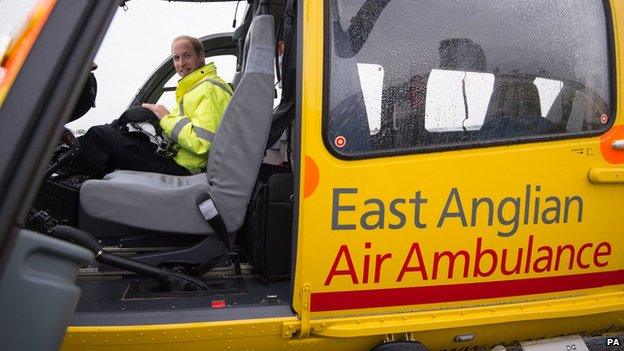
From 2015 to 2017, William worked as a helicopter pilot with the East Anglian Air Ambulance, based at Cambridge and Norwich airports. It was not a ceremonial role, a royal visit dressed up as employment, or a carefully managed palace project designed only for photographs.
It was a real job. With a real rota. And real trauma waiting at the end of each call.
The Prince, then the Duke of Cambridge, flew medical crews to road collisions, serious accidents, sudden emergencies and scenes of deep human distress. He worked shifts that included nights and weekends, joining doctors and paramedics who had no time for royal theatre when lives were at stake.
In that world, rank mattered far less than competence. The helicopter had to fly. The crew had to trust each other.
And William had to do the job.
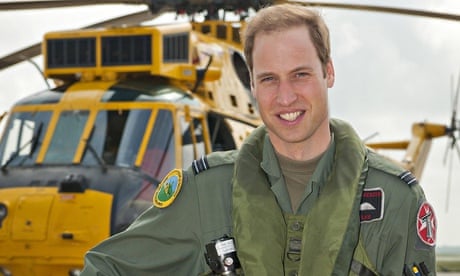
Those who worked around him later described not a prince demanding special treatment, but a crew member who made tea, accepted the banter and tried to fit into the team without fuss. It was a rare glimpse of royal service stripped of gold braid and palace language.
No balcony. No carriage. No cheering crowd.
Just a pilot, a headset and the knowledge that someone on the ground might be having the worst day of their life.
William’s salary, reported to be in the region of £40,000 a year, was donated in full to charity. It was a detail that revealed something important about the role. He was not doing it for money, status or headlines. He already had all the status the world could give him.
He was doing it because the work mattered.
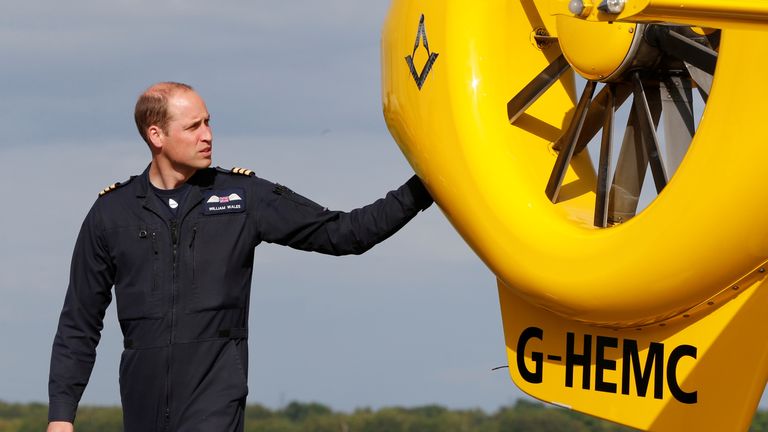
Before joining the air ambulance, William had already served as a search-and-rescue pilot with the RAF in Anglesey, flying Sea King helicopters and taking part in more than 150 operations. That experience gave him a direct understanding of emergency work, danger, teamwork and the strange silence that can follow a successful rescue or a heartbreaking outcome.
But the air ambulance years appear to have affected him in a different way.
This was not military service at a distance from everyday civilian life. This was the NHS, emergency medicine and ordinary families in crisis. William was landing in fields, on roads and near homes where people were suddenly facing fear, injury, grief or loss.
He later spoke about how the work left marks on him.
Some callouts involving children affected him deeply. The accumulated weight of what he witnessed, he admitted in later conversations, brought him closer to serious psychological strain than almost anything else in his life.
That honesty became one of the most meaningful parts of his public story.
For years, royals had often been expected to appear composed no matter what. Duty meant silence. Strength meant restraint. Pain was something to be folded away behind a formal smile.
William’s experience in emergency service helped shape a different message.
He came to understand that mental wellbeing was not a soft issue, a fashionable slogan or something that happened only to other people. It was real. It was urgent. And it could affect even those trained to stay calm under pressure.
That understanding fed directly into his later work on mental health, including the Heads Together campaign, which he launched with Princess Catherine and Prince Harry. The campaign encouraged people to speak more openly about psychological strain, grief and emotional pressure.
For William, the subject was not abstract. He had seen trauma. He had carried some of it home.
And he had learned that silence could be dangerous.
That is what makes his air ambulance years so important in understanding the man he has become.
They were not just an interesting footnote in a royal biography. They were part of the formation of a future king.
William had already known public grief from childhood. He had lost his mother, Princess Diana, at the age of 15 and had grown up under the glare of cameras that recorded his mourning for the world. But the air ambulance gave him another education in grief: the grief of strangers, sudden and raw, arriving without warning.
He saw families at the moment before life changed forever.
He saw emergency workers walk toward scenes most people would run from.
He saw the emotional cost of service when there is no guarantee of a happy ending.

That kind of experience cannot be replicated by palace briefings. It cannot be learned from a red box.
It cannot be fully understood from the back seat of an official car. It has to be lived. And for two years, William lived it.
His decision to take the job also reflected a very modern royal instinct. Instead of preparing for kingship only through traditional duties, he stepped into a workplace where ordinary hierarchy did not revolve around his title. In an air ambulance crew, he was not the heir’s heir. He was part of a team. That distinction matters.
The monarchy is often criticised for distance. Palaces can seem remote. Protocol can feel cold. Ceremony can appear far removed from everyday life. But William’s air ambulance work placed him directly into the reality of public service, where the stakes were immediate and deeply human.
He was not speaking about service. He was performing it. That is why the job still resonates with royal watchers today.
It showed a side of William that was practical, disciplined and grounded. It also revealed a man trying to build his own version of duty, separate from the grander rituals of monarchy.
There is something powerful about the contrast. A future king, flying in darkness. A prince, landing beside road accidents.
A royal salary, quietly donated.
A man born into privilege, choosing to spend nights in a role where privilege could not protect anyone from tragedy.
It would be easy to romanticise the work, but William himself has been clear that it came with emotional difficulty. Emergency service is not heroic in a simple, cinematic way. It is demanding, messy and often heartbreaking. Some lives are saved. Others are not.
That truth appears to have stayed with him.
When he left the East Anglian Air Ambulance in the summer of 2017, it was not because the role had been symbolic and finished its purpose. It was because royal life was changing. Prince Philip was stepping back from public duties, Queen Elizabeth II was in the later years of her reign, and William was needed more fully as a working royal.
His future was moving closer. The rota gave way to the royal diary. The flight suit gave way to formal engagements.
The emergency calls gave way to the long apprenticeship of kingship. But the experience did not disappear.
It remained part of him.
Today, when William speaks about mental health, emergency workers, bereavement or the pressures facing families, there is a different kind of weight behind the words. He is not speaking only from inherited concern or polished briefing notes. He is speaking as someone who has sat with crews, flown into crisis and seen how quickly ordinary life can fracture.
That gives his public work a quiet credibility. It also helps explain the kind of king many supporters believe he may become.
William’s strength has often been described as controlled, measured and steady. He is not known for theatrical emotion or dramatic personal revelation. But his air ambulance years suggest a man shaped by proximity to real suffering, and by the knowledge that leadership is not only about being seen at the centre of national ceremonies.
Sometimes leadership is about showing up when no one is watching. Sometimes it is about doing the work.
Sometimes it is about understanding that service is not a word to be engraved on a programme, but a duty carried out at inconvenient hours, in bad weather, with no guarantee of praise.
That is the quiet force of this chapter in William’s life. It cuts through the glamour. It removes the distance.
It shows a prince who spent part of his adult life inside one of Britain’s most urgent public services and emerged with a deeper respect for those who do it every day.
He remains one of the only future British monarchs to have held down a civilian job answering emergency calls. That fact alone makes the chapter remarkable. But the more important truth is what the job taught him.
It taught him about teamwork. About trauma. About humility.
About the invisible burden carried by those who run toward disaster for a living.
And perhaps most of all, it taught him that duty does not always look like a crown. Sometimes it looks like a night shift.
Sometimes it sounds like a radio call. Sometimes it is a helicopter lifting into the dark because somewhere below, a family is waiting for help.
The next time Prince William wears a uniform with wings on it, it may be ceremonial. The photographs will be polished, the setting formal, the symbolism carefully understood.
But the hours he once flew were not ceremonial. They were real.
And in the long story of the future king, they may prove to be among the most revealing hours of all.


