
The Sunday queue outside Rubato HK Café was already snaking down the street before the doors even opened, with hungry customers pressing in for a taste of what had suddenly become the hottest table in town. By the time service got going, the place was buzzing with orders of HK French toast, bolo bao buns, and a handful of special dishes that had recently made their way onto television screens through “Top Chef: Carolinas.” Within barely two hours, every last plate of the chef’s televised creations was gone, leaving latecomers staring at empty trays and staff calling out that the kitchen had officially sold out.
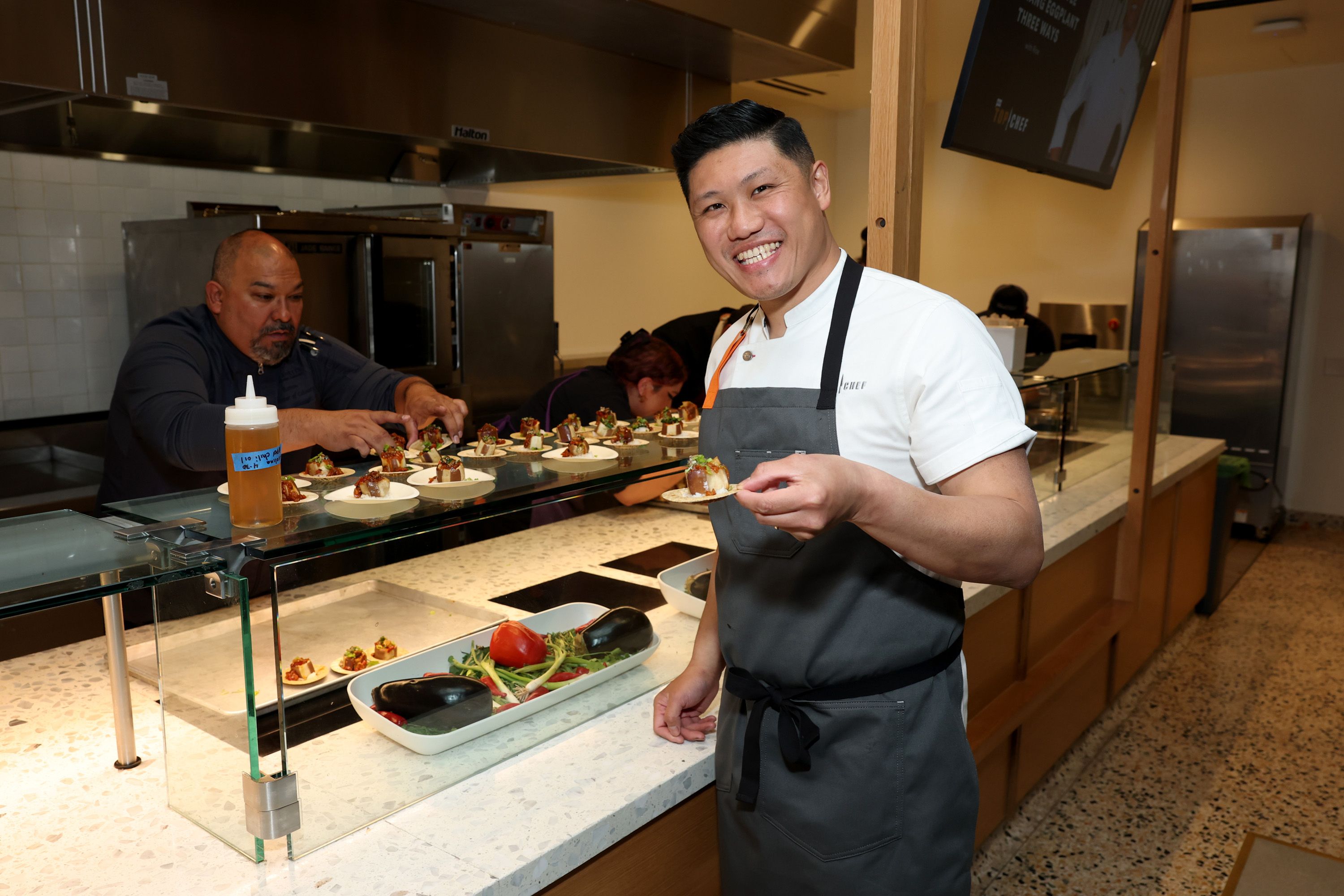
At the centre of the storm is Laurence Louie, the café’s owner and one of the standout contestants from the hit cooking competition. Louie, who represents Quincy and proudly leans into his Chinese American roots, made a deep run on the show and ultimately secured a runner-up finish in a fiercely competitive season. Alongside New York chef Sherry Cardoso, he narrowly missed out on the crown, with Filipino chef Rhoda Magbitang taking the top spot in a dramatic finale that aired Monday night.
But while the trophy slipped through his fingers, Louie’s profile has skyrocketed in a way few could have predicted. Viewers followed his journey week after week as he delivered technically ambitious, emotionally charged plates that reflected both his upbringing and his culinary education. From delicate Cantonese-style steamed fish to bold Turkish-inspired dishes picked up during his time cooking in London, his menu choices consistently pushed boundaries and impressed even the most demanding judges.
Behind the polished television edits, however, lies a far less glamorous story of graft, reinvention and personal sacrifice. Louie’s path into professional cooking did not begin in a culinary school or Michelin-starred kitchen, but in a very different world altogether. Before aprons and hot pans, he was working in community organising, focused on grassroots projects rather than gastronomy. It was only around 12 years ago that he made a dramatic career pivot, stepping into a kitchen for the first time as a line cook at Oleana in Cambridge.
At the time, Oleana already carried serious weight in the food world, but Louie admits he had no idea of its reputation or significance when he joined. What mattered more was simply learning, surviving service, and absorbing everything he could from the fast-paced environment. From there, his ambition took him overseas, where he continued refining his skills and building the foundations of what would eventually become his distinctive cooking style.
His return to Quincy, however, was not part of the original plan. Before the pandemic disrupted everything, Louie had been preparing to open a Chinese restaurant in London as part of an ambitious new dining group. Those plans collapsed when COVID-19 shut down the industry and forced a global rethink. Around the same time, his mother called from Quincy with a request he had previously resisted: to come home and take over her struggling bakery business.
The shop, originally known as Contempo Bakery, was something of a family experiment in creativity and music as much as food. His mother, a performer at heart, had even used the space as a rehearsal ground for her band, where she served as lead singer. The name itself reflected that musical influence, drawing from the term “contrep,” meaning to play in time. But when Louie stepped in, he made the decision to shut down the original concept and reopen it with a new identity: Rubato, a musical term that refers to playing with flexible timing, almost the opposite of strict structure.

That change did not come without friction. Early on, tensions surfaced between mother and son over creative direction, including a now well-known disagreement about bao buns. Traditionally served open, Louie chose to close his version of char siu bao, a decision that broke with convention and sparked debate in the kitchen. Over time, however, customers embraced the new style, and even his mother eventually warmed to the direction, occasionally stopping by and asking for one of his buns herself.
As Rubato grew in popularity, so too did Louie’s recognition in the wider culinary world. His innovative approach and confident reinterpretation of heritage dishes earned him a James Beard Award nomination in 2024, cementing his reputation as one of the most exciting chefs working in the region. A year later, he stepped onto the “Top Chef: Carolinas” stage, bringing with him not only technical skill but also a deeply personal narrative rooted in identity, family and resilience.
Throughout the competition, Louie often spoke about his mindset in high-pressure moments, revealing that elimination was never far from his thoughts. At one point during filming, he admitted he told himself that if he was going out, it would be on his own terms, cooking the food that truly represented who he was. That philosophy translated directly onto the plate, where every dish felt like a statement rather than just a challenge submission.
The finale itself played out in front of friends and family gathered at a packed watch party in Cambridge. Louie watched alongside his wife and father, while his mother stayed home to look after his young son. Though the result did not go his way, the atmosphere was one of pride and celebration, reflecting how far he had come from his early days in a Cambridge kitchen.
Now, with the show behind him and demand for his food higher than ever, Louie is already weighing up what comes next. Pop-up events are on the table, along with other potential projects that could further expand his culinary footprint. For a chef who once walked away from an entirely different career, the journey from community organiser to nationally recognised runner-up has already been anything but ordinary.


