
Kristen Kish has recently reflected on her long and unexpected journey from being a competitor on Top Chef to eventually returning to the same franchise as its host, describing the experience as something that continues to feel meaningful and surreal in hindsight. Her story is often revisited because it combines resilience, reinvention, and a very unconventional path through reality television success.
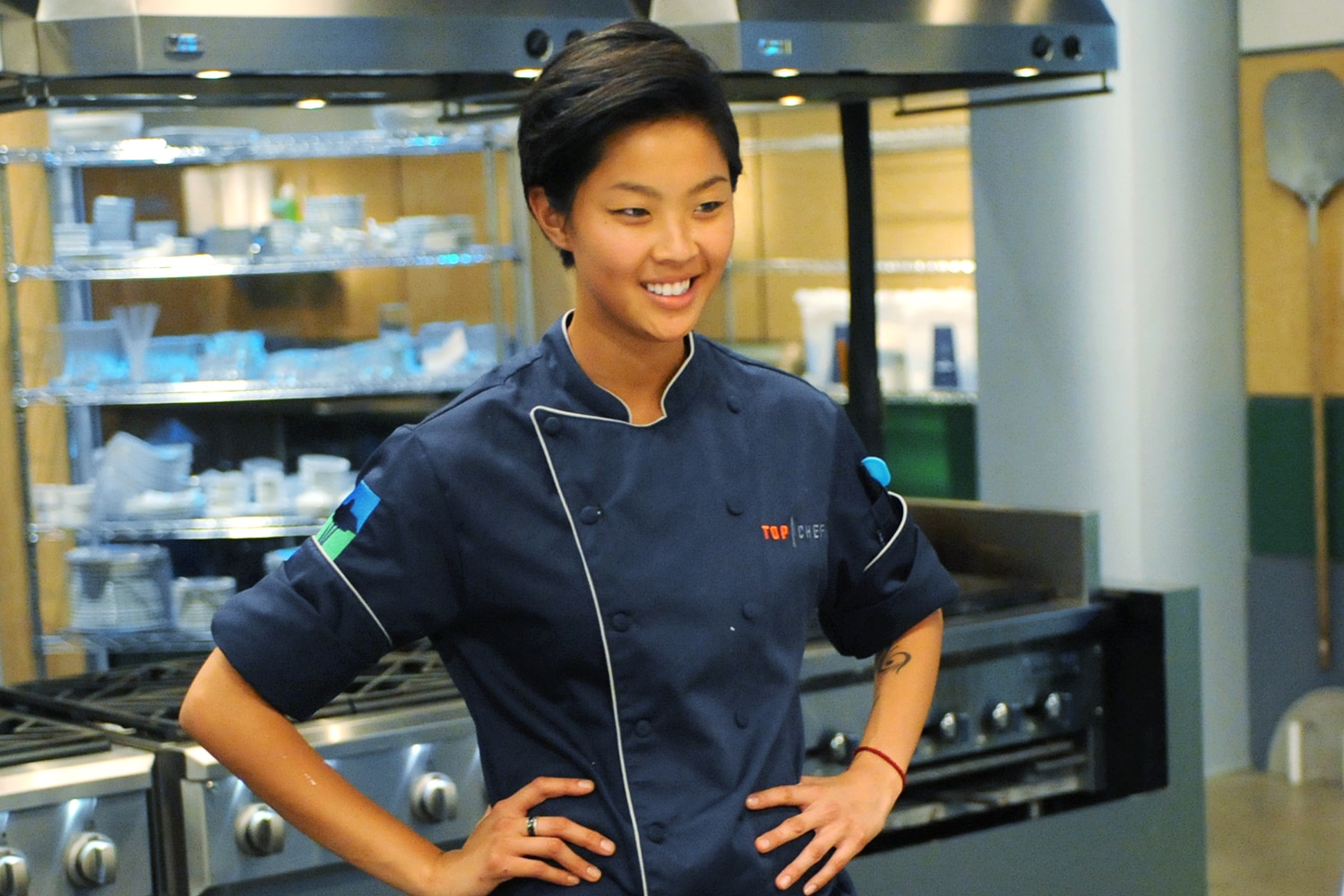
During Top Chef Season 10, Kish’s run was far from straightforward. She was eliminated in Episode 11, a moment that could have ended her journey entirely. However, the competition format of that season included Last Chance Kitchen, a secondary opportunity where eliminated chefs could fight their way back into the main contest. Kish managed to navigate that additional pressure successfully, earning her way back into the competition. Once reinstated, she went on to win the entire season, transforming what initially looked like defeat into one of the show’s most memorable comeback victories.
Looking back on that period, Kish has often said she would not go back and give her younger self advice, even if she could. She has explained that she believes too much outside guidance or overthinking might have changed the way things unfolded. In her view, part of what made the outcome meaningful was the fact that she experienced everything directly, without trying to correct or overanalyze her decisions in the moment. She has suggested that although it was stressful at the time, the final result proved that her original instincts were enough, and altering them might have led to a different path entirely.
Winning Top Chef brought her not only the title but also a cash prize. However, she has been open about the fact that the winnings were not life-changing in the way some people might assume. In interviews, she noted that the prize amount she received at the time was significantly lower than what later seasons offered competitors. She recalled, with humor, that after taxes and real-life expenses, there was not much left. A large portion of the money was immediately used as a deposit toward purchasing a condominium, and the remainder was reduced further by taxes and everyday costs. In her own words, after everything was accounted for, the money essentially disappeared, though she has framed it more as a practical stepping stone than a disappointment.

Over the years following her win, Kish continued building her career in the culinary world and eventually transitioned into television hosting. Her evolution within the Top Chef franchise became especially notable when she returned as the official host starting in Season 21. This marked a full-circle moment, as she had once been a contestant fighting through elimination challenges and was now guiding new chefs through the same intense environment she once experienced firsthand.
As a host, Kish has spent multiple seasons tasting dishes from some of the most talented chefs in the industry. She has shared that most of what she encounters on the show is impressive, given the level of competition and the standards the chefs are expected to meet. However, she has also admitted that certain dishes stand out more than others in both positive and negative ways.
One of her most memorable recent experiences involved a dish created by Tristen Epps-Long, who went on to win Season 22. Kish described the finalist’s meal as exceptional in nearly every way, praising not only the technical execution but also the creativity and personal identity behind the food. She emphasized that the dish felt intentional and reflective of the chef’s character, which made it particularly impactful. For her, it represented the kind of cooking that succeeds both conceptually and practically, leaving a lasting impression.
On the other hand, she has also encountered dishes that did not resonate with her palate, even if they were part of the competition’s intentionally difficult challenges. She mentioned a Quick Fire challenge in particular where one dish combined blue cheese and eggs in a way that she personally found overwhelming. While she was careful to note that Top Chef rarely produces outright bad food due to the talent level involved, she acknowledged that certain experimental combinations simply do not suit everyone’s taste, including her own.

Beyond the food itself, Kish has also commented on the evolving nature of the show and its guest appearances. In Season 23, which was set in the Carolinas, the series featured crossover moments with personalities from other Bravo programming, including Craig Conover and Madison LeCroy from Southern Charm. Kish expressed appreciation for these types of guest appearances, explaining that she enjoys when different worlds intersect naturally. She has said that bringing in guest judges adds depth to the conversations around food, because it introduces new perspectives and helps broaden the way dishes are evaluated. It also allows for more dynamic discussions that go beyond technical cooking skills and into culture, personality, and storytelling.
Outside of judging and hosting duties, Kish has also shared small behind-the-scenes habits from filming Top Chef. One lighthearted detail she revealed is that after a season finishes filming, she tries to avoid eating candy for about a week. According to her, there is an abundance of candy available on set throughout production, ranging from gummy and chewy varieties to sour sweets. After prolonged exposure during filming, she finds it necessary to take a short break from those treats once production ends, simply to reset her palate and routine.
Overall, Kristen Kish’s reflections highlight a career shaped by unexpected turns, from being eliminated and returning to win, to spending her prize money pragmatically, and eventually stepping into the role of host. Her perspective emphasizes growth through experience rather than perfection, and she often returns to the idea that everything unfolded as it needed to, even when it felt uncertain at the time.


