
Controversial Speaker Sparks Heated Debate on Immigration and Islam at University of Florida Event
A campus appearance by British political activist and commentator Tommy Robinson ignited controversy and intense debate this week at the University of Florida, drawing supporters and critics alike as discussions over immigration, religion, free speech, and national identity took center stage.
The event, which centered on Robinson’s views regarding Islam, immigration policies, and cultural integration in Western nations, culminated in a tense exchange between the speaker and a student attendee during a question-and-answer session that quickly became the focal point of the gathering.
Videos of the interaction circulated widely on social media following the event, generating thousands of comments and renewed debate over the boundaries of political discourse on university campuses.
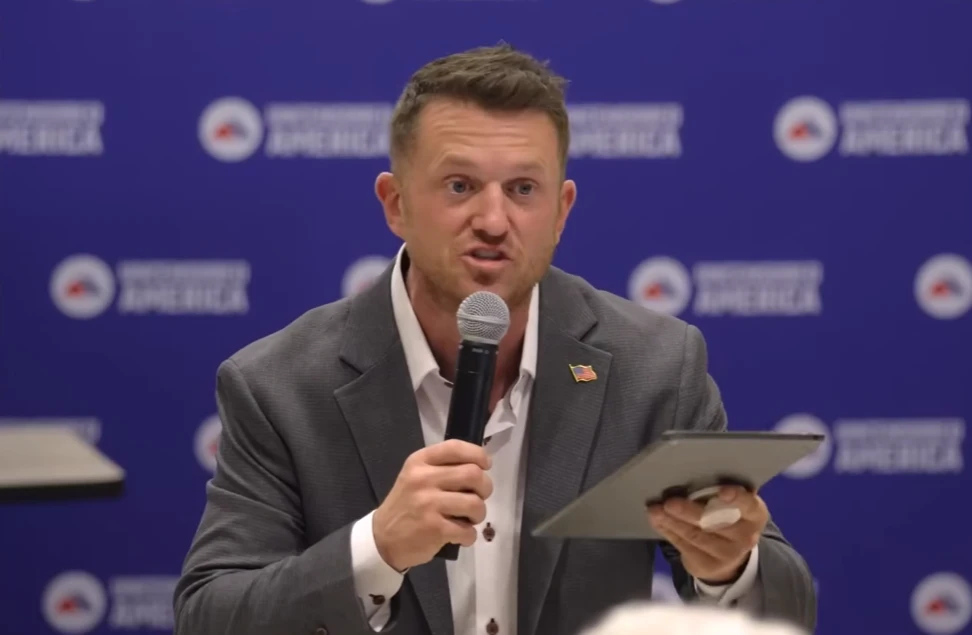
Speech Focused on Immigration and Cultural Integration
During his presentation, Robinson argued that Western nations should take a more restrictive approach to immigration from Muslim-majority countries and expressed concerns about what he described as the incompatibility of certain interpretations of Islamic law with democratic institutions.
Throughout the speech, he cited examples from Europe, particularly the United Kingdom, where he has long been involved in political activism related to immigration and integration issues.
Robinson referenced topics including honor-based violence, religious extremism, community policing initiatives, crime statistics, and the operation of informal religious systems within immigrant communities. He also criticized government policies that provide security funding to religious institutions and argued that Western governments have failed to address cultural tensions associated with immigration.
Several of Robinson’s proposals drew applause from portions of the audience, while others prompted visible disagreement among attendees.
Student Challenges Speaker During Q&A Session
The most contentious moment of the event occurred when a student challenged Robinson’s characterization of Islam and accused him of promoting prejudice.
The exchange began after the student stated that Islam is a religion and argued that Robinson’s comments contributed to hostility toward Muslims.
Robinson responded by asking the student to identify specific statements she believed were hateful. The discussion quickly evolved into a broader debate over religious freedom, extremism, immigration, and interpretations of Islamic doctrine.
At several points, audience members joined the conversation, with some supporting Robinson’s position and others expressing disagreement.
Observers described the exchange as tense but largely orderly, with university staff and event organizers allowing both parties to speak without interruption.
Supporters of Robinson’s appearance argued that universities should remain venues for challenging discussions and diverse viewpoints, even when those views are controversial.
Several attendees said they appreciated the opportunity to hear arguments that are often excluded from mainstream academic settings.
Others argued that Robinson’s presentation raised legitimate questions about immigration policy, cultural integration, and public safety that deserve public discussion.
Critics, however, accused Robinson of promoting stereotypes and unfairly portraying an entire religion through the actions of extremists.
Muslim advocacy organizations and civil rights groups have frequently criticized Robinson’s past statements, arguing that they contribute to discrimination against Muslim communities.
“There’s a difference between discussing public policy and making broad claims about millions of people,” said one student who attended the event.
University officials did not immediately comment on the content of the speech but reiterated the institution’s commitment to free expression and open dialogue.
Broader National Debate Reflected on Campus
The controversy surrounding the event reflects larger national conversations occurring across the United States and Europe regarding immigration, religious freedom, national identity, and the role of universities as forums for political debate.
Political scientists note that speakers such as Robinson often generate strong reactions because they address issues that sit at the intersection of free speech, security concerns, religion, and cultural identity.
“The debates themselves are not new,” said one political analyst. “What’s changed is how quickly these exchanges spread online and become part of larger national conversations.”
Event Highlights Continuing Tensions Over Campus Speech
The University of Florida event ultimately became less about the prepared remarks and more about the spontaneous exchange that followed.
For critics, it illustrated the dangers of rhetoric they believe stigmatizes minority communities.
As videos from the event continue to circulate online, the discussion surrounding free speech, religious criticism, immigration policy, and campus discourse appears likely to continue well beyond the university auditorium where the debate took place.


