
Political developments in Hungary remain at the heart of European debates following the recent change of power. Many observers associate the rise of Péter Magyar as the designated Prime Minister with the expectation of a change in political direction.
However, the first programmatic statements and political signals suggest that the actual development may be more complex than initially assumed.
The situation is not one of simple transformation, but rather one that reflects layered political realities, competing interests, and structural constraints that shape decision-making in Budapest.

The focus of attention is the question of whether Hungary will show a closer rapprochement with the European Union under the new leadership, or whether the essential elements of the previous policy under Viktor Orbán will continue.
This uncertainty determines both public opinion and political judgment in Brussels, especially in the environment of Ursula von der Leyen. The broader European context, marked by geopolitical instability and economic pressures, further intensifies scrutiny on Hungary’s evolving political stance.
The conversation in the transcript captures precisely this uncertainty and formulates a central question: is this a real political new beginning for the new government, or is it merely a personnel change with an unchanged strategic direction?
This question forms the starting point for further analysis. It is also a question that resonates beyond Hungary, touching on broader themes of democratic change, institutional continuity, and the limits of political transformation within established systems.
At the same time, the symbolic dimension of leadership change cannot be ignored. Leadership transitions often carry expectations that go beyond concrete policy shifts, creating a narrative of renewal that may or may not align with reality.
In Hungary’s case, the symbolic break with the past is being tested against the persistence of long-standing political priorities and alliances.
One of the main points of contention concerns energy policy. According to this, Hungary would continue to buy Russian oil, which is interpreted as a sign of continuity.
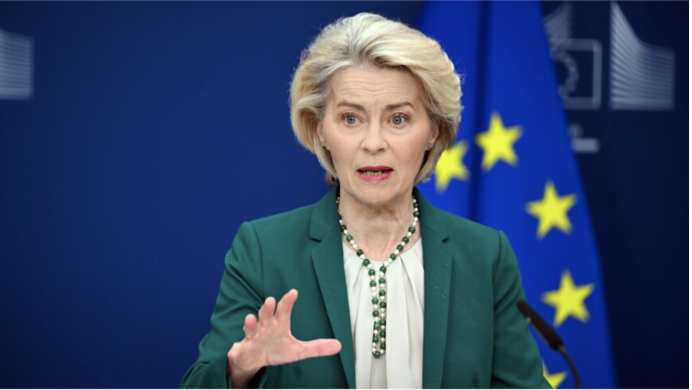
This position is in tension with the expectations of many EU member states, which are calling for a reduction in dependence on Russian energy supplies. The divergence highlights the structural challenges of aligning national energy needs with collective European strategies.
Energy policy is not merely an economic issue but also a geopolitical one. Hungary’s continued engagement with Russian energy sources reflects both practical considerations and strategic calculations.
The country’s infrastructure, market dependencies, and pricing concerns all play a role in shaping this stance, making rapid policy shifts difficult even under new leadership.
Another central aspect is the attitude towards the EU loan package for Ukraine. According to the transcript, it has become clear that although Hungary does not want to block the loan in principle, it does not want to actively participate in the financing due to its own economic framework conditions.
This differentiated position highlights the ambivalence between formal consent and practical abstention. It also illustrates how economic limitations intersect with political positioning.
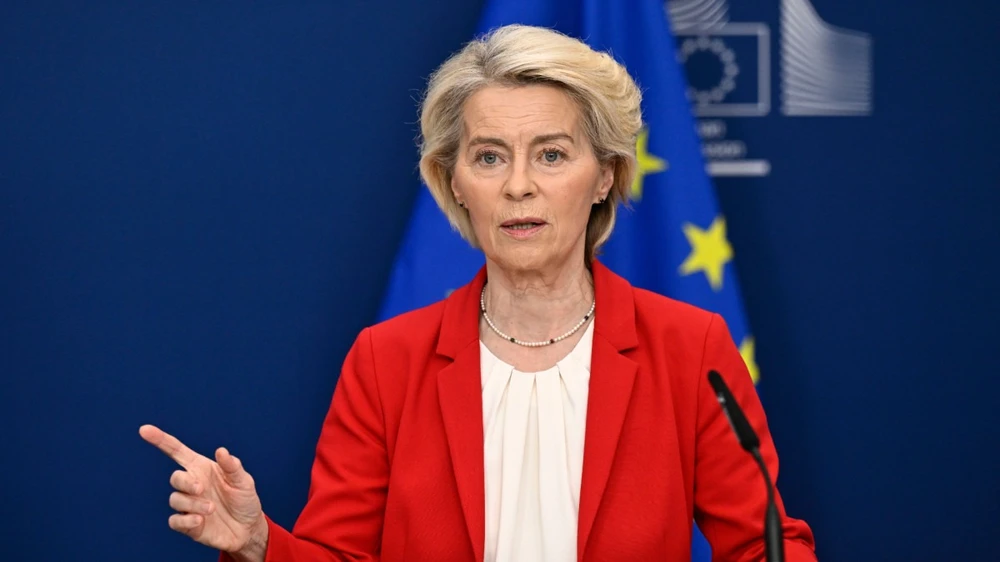
This approach allows Hungary to maintain a degree of alignment with EU decisions while simultaneously preserving its domestic fiscal priorities.
It is a balancing act that reflects the complexity of navigating between solidarity and self-interest, especially in times of economic strain. Such positioning may become a defining feature of the new government’s policy style.
In addition, the rejection of Ukraine’s accelerated EU accession is also emphasized. This position is largely in line with Hungary’s previous line and once again underlines continuity on key foreign policy issues.
It suggests that, despite changes in leadership, certain strategic perspectives remain deeply embedded in the country’s political framework.
The issue of EU enlargement is particularly sensitive, as it involves questions of institutional capacity, economic readiness, and political alignment.
Hungary’s cautious stance may therefore be interpreted not only as resistance but also as a reflection of broader concerns shared by other member states, even if expressed more explicitly in Budapest.
A nuanced picture also emerges regarding Russia policy. Magyar is quoted as saying that if Vladimir Putin called, he would accept the call. At the same time, he emphasizes that he intends to review existing energy contracts and, if necessary, renegotiate them.
These statements point to a pragmatic approach that includes both a willingness to engage in dialogue and strategic flexibility.
This dual approach reflects an understanding of the realities of international relations, where communication channels are often maintained even amid political disagreements. It also indicates that Hungary may seek to recalibrate rather than completely redefine its external partnerships.
A further point of discussion concerns the domestic political situation during the transition period. The transcript points out that the current parliament is still capable of action until the inaugural session.
This raises the possibility that political decisions may still be made, which the new leadership views critically. The transitional phase thus becomes a politically sensitive period with potential long-term implications.
Such institutional overlaps are not uncommon in political transitions, but they can create tensions between outgoing and incoming authorities. Decisions taken during this period may be perceived as attempts to shape the future policy environment, leading to disputes over legitimacy and intent.
In this context, the demand for Orbán’s premature resignation is also discussed. This demand is considered strategically motivated in the conversation to limit the current government’s room for maneuver. It reflects the broader struggle over political control and narrative framing during the transition.
The debate around resignation also highlights the importance of timing in politics. Strategic decisions about when to step down or remain in office can significantly influence the scope of action available to both outgoing and incoming leaders.
The analysis in the transcript also points to the contradictions observed in the political assessment of similar processes. As an example, comparisons with legislative decisions in other.
European countries are given to illustrate the different standards applied in political criticism. This observation raises questions about consistency and fairness in political evaluation.
Such discrepancies may contribute to a sense of political fragmentation within the European Union, where member states are sometimes judged by differing criteria. This, in turn, can affect trust and cooperation at the institutional level.
The central element of the argument is the assessment that the entire political spectrum in Hungary continues to be defined by more conservative and nationally oriented positions.

This leads to the thesis that a fundamental ideological turn cannot be recognized at present. Instead, continuity appears to outweigh transformation.
This ideological consistency may be rooted in historical, cultural, and social factors that shape public opinion and political discourse. As a result, even new leaders may find themselves operating within established boundaries that limit the scope of change.
At the same time, the conversation emphasizes that future developments will largely depend on how Magyar positions itself between domestic political expectations and external pressure.
This dual challenge may significantly affect the political space of the new government. Navigating these pressures requires careful calibration and strategic communication.
Domestic expectations may push for stability and continuity, while external actors, particularly within the EU, may advocate for reform and alignment. Balancing these demands is a complex task that will likely define the success or failure of the new leadership.
Another important dimension is the role of public perception. Political legitimacy is not only determined by policy outcomes but also by how these policies are communicated and understood by the public. In this regard, the narrative surrounding change versus continuity becomes crucial.
Media coverage and political discourse will play a significant role in shaping this narrative. Competing interpretations of the same developments may lead to divergent public opinions, further complicating the political landscape.
Economic considerations also remain central to Hungary’s policy decisions. Budgetary constraints, inflation, and broader economic challenges may limit the government’s ability to implement ambitious reforms. These constraints reinforce the tendency toward cautious and incremental change.
In addition, Hungary’s position within the European Union involves complex negotiations over funding, regulations, and political alignment. These negotiations require a delicate balance between asserting national interests and maintaining constructive relationships with EU institutions.
The international environment further adds to the complexity. Ongoing geopolitical tensions, particularly in Eastern Europe, create a context in which foreign policy decisions carry heightened significance. Hungary’s choices in this المجال will be closely monitored by both allies and critics.

The interplay between domestic and international factors underscores the multifaceted nature of political change. It is not simply a matter of leadership but of navigating a web of interconnected challenges and opportunities.
Ultimately, the question remains whether the current developments represent a genuine turning point or a continuation under new leadership. The evidence so far suggests a combination of both elements, with continuity playing a significant role.
This ambiguity may persist in the near term, as the new government establishes its priorities and responds to emerging challenges. Over time, clearer patterns may emerge, allowing for a more definitive assessment.
In conclusion, the political situation in Hungary continues to be characterized by uncertainty and contradictory expectations. The change of power has not yet shown a clear new direction, but rather has highlighted existing tensions within the European Union.
Whether this represents a long-term strategic shift or is merely a phase of adjustment remains a subject of ongoing political and social debate. The coming months and years will be crucial in determining the trajectory of Hungary’s political development and its role within the European framework.


