
For 16 years, television host Ted Allen has been the familiar face guiding viewers through the high-pressure world of Chopped, where professional chefs are pushed to their limits with mystery ingredients, tight deadlines and the constant threat of elimination. But even after more than a decade and a half on the job, Allen admits that the latest spin on the long-running Food Network hit raises the bar in a way he has never seen before.
:max_bytes(150000):strip_icc():focal(764x272:766x274):format(webp)/Ted-Allen-060826-feee9b09f24047cb80f5a85da275fe6e.jpg)
He describes the new format as familiar in name and spirit, but dramatically intensified in execution, saying it feels like the original concept has been pushed far beyond its usual boundaries. In his view, this new version doesn’t just raise the difficulty slightly — it multiplies it.
The new series, which launched on May 12, transports 12 chefs away from the controlled environment of a television studio and drops them onto a remote Caribbean island. There, the competition becomes as much about survival and adaptability as it is about cooking. Contestants are no longer simply stepping up to a stainless steel workstation with neatly arranged baskets of ingredients. Instead, they are forced to create their own cooking setups from scratch, using whatever materials they can find in the environment around them.
Rather than relying on gas burners and kitchen equipment, the chefs must prepare food over open flames, often in unpredictable and difficult outdoor conditions. On top of that, they are required to take part in physically demanding challenges in order to earn access to mystery ingredient boxes. These challenges determine not only what they cook with, but also whether they can gain any strategic advantage in the game.
Allen has openly admitted that even for him, watching the first day of filming was something of a shock. One of the earliest challenges involved retrieving the famous mystery baskets in a way that was completely unlike anything seen in previous versions of the show. Instead of sitting on a table waiting to be opened, the boxes were placed out in rough sea water, anchored offshore and tied down with ropes connected to heavy rocks on the ocean floor.
Contestants were required to swim out into strong, choppy waters to reach them. The conditions were far from calm, and the physical strength needed to complete the task was significant. According to Allen, the chefs were battling waves and unpredictable surf just to secure the very ingredients they would later have to turn into restaurant-quality dishes.
:max_bytes(150000):strip_icc():focal(837x411:839x413):format(webp)/chopped-castaways-4726-09b2c302d1c44438bb816e95369ad695.jpg)
He recalled being stunned that such an intense challenge was introduced right at the start of filming, describing it as a dramatic welcome to the new island-based format. From his perspective, it immediately signalled that this version of the competition would operate on a completely different level.
As the series progresses, contestants are pushed through a variety of survival-style tasks. These include activities such as spearfishing and archery, all designed to test their physical endurance and resourcefulness in addition to their culinary abilities. Success in these challenges often determines how well they can cook later, since winning provides access to better ingredients or useful advantages.
The environment itself becomes another major obstacle. Filming takes place in harsh outdoor conditions where weather plays a constant role in shaping the competition. Chefs are forced to work through heavy rain, strong winds and thick smoke created by open-fire cooking. The ground beneath them is often muddy and unstable, making even basic movement difficult and exhausting.
Despite these extreme conditions, Allen insists that the essence of the show remains unchanged. At its core, the competition is still about food, creativity and execution under pressure. No matter how tough the environment becomes, the judges continue to evaluate dishes using the same fundamental criteria that have always defined the series: taste, presentation and originality.
:max_bytes(150000):strip_icc():focal(1192x527:1194x529):format(webp)/Chopped-Castaways-3-060826-e6b0635462ce49e29de6ed7fe61f2f29.jpg)
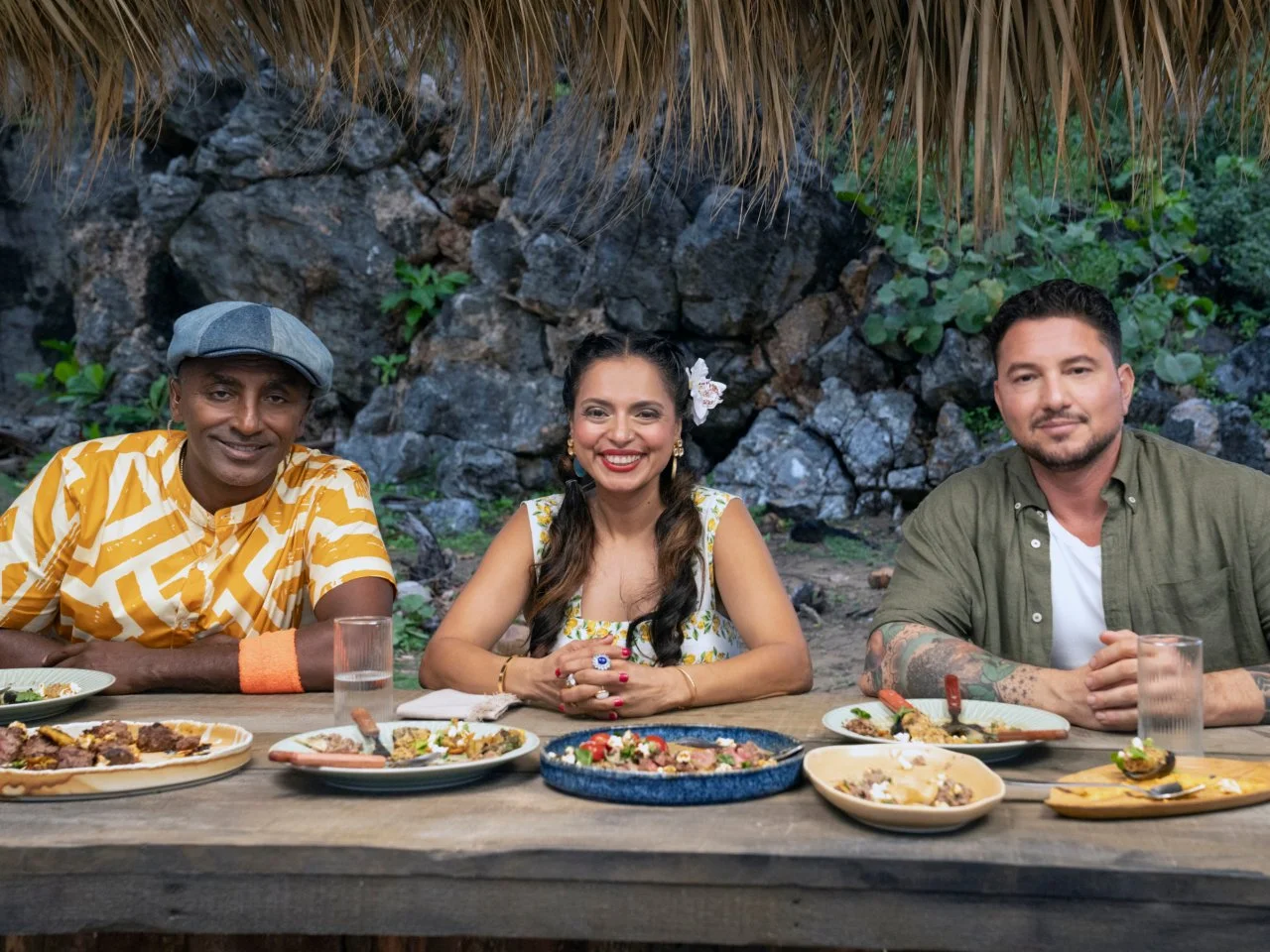
The judging panel, which includes respected chefs Maneet Chauhan, Marcus Samuelsson and Gabe Bertaccini, plays a key role in keeping the focus on culinary skill rather than physical performance. Allen has praised them as experienced professionals who are more than capable of handling the chaos that comes with filming in such an unpredictable setting. According to him, they are not easily fazed by mud, weather or any of the other obstacles thrown into the mix.
One of the key points Allen repeatedly emphasises is that no amount of physical challenge can replace cooking talent. While contestants may have to fight their way through difficult tasks to even begin preparing their dishes, the final decision always comes down to what ends up on the plate. The chef who wins, he explains, will always be the one who manages to produce the strongest food, regardless of everything they had to endure beforehand.
He stresses that viewers should not expect the outcome to be influenced by who performs best in the physical challenges alone. Those elements may affect momentum and access to ingredients, but they do not override the importance of culinary ability when it comes time for judging.
Allen has also kept details of the winner tightly under wraps, but he hints that the result of the series may surprise audiences. He suggests that the outcome is not easily predictable and that this unpredictability is very much intentional, designed to keep viewers engaged and guessing right until the end.
Behind the scenes, he reflects positively on the experience despite its difficulty. He describes the production as intense but rewarding, and expresses admiration for the contestants who managed to adapt to such extreme circumstances while still producing high-quality food. In his view, the level of resilience shown by the chefs is one of the most impressive aspects of the entire series.
Ultimately, Allen believes that audiences tuning in will come away with a new appreciation for what professional chefs are capable of when pushed far outside their comfort zones. The combination of survival conditions and culinary pressure, he suggests, creates a version of Chopped that feels entirely new while still staying true to its roots.
For him, this is not just another season of a familiar competition, but a bold step into new territory. And while it may be tougher than anything the franchise has attempted before, he hopes viewers will enjoy watching it as much as the team enjoyed creating it.


