
Rhoda Magbitang’s rise on Top Chef: Carolinas has been nothing short of historic. Her journey to victory on June 8 not only crowned her as the season’s champion but also marked her as the first Filipina to ever claim the Top Chef title. She also became the first chef from Hawaiʻi to win the competition and the first woman to take the crown since Melissa King in 2020. Her win has been widely celebrated, and it’s easy to see why: Magbitang’s finale menu was a heartfelt tribute to the flavors and traditions of her Filipino heritage, capturing the attention and admiration of the judges.
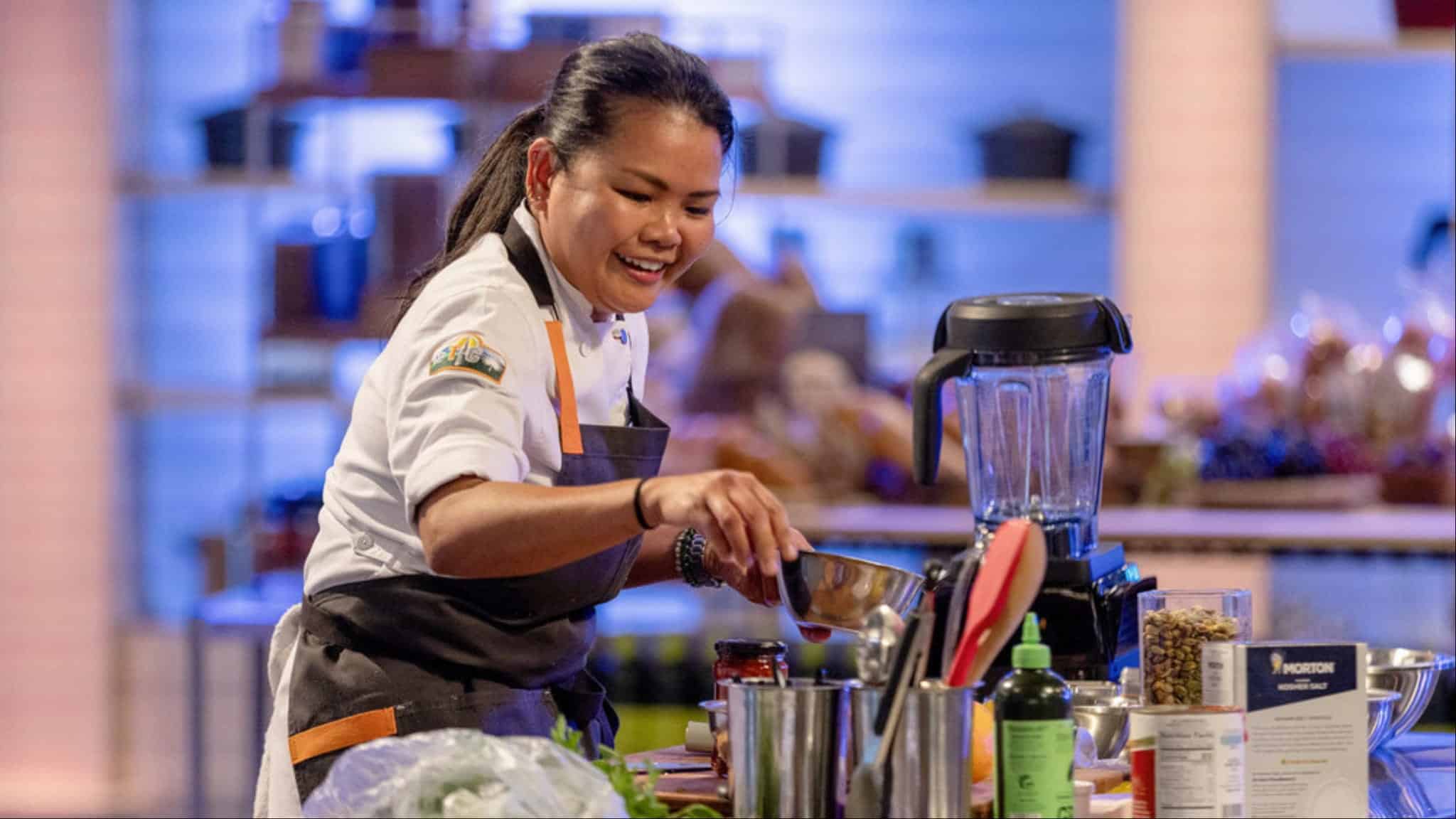
Interestingly, Magbitang never actively sought out a spot on the show. A longtime fan of Top Chef, she was scouted by the producers and encouraged to audition, ultimately accepting the challenge. Once cast, she quickly proved she belonged in the kitchen, making history by winning the season’s first two individual elimination challenges consecutively—a feat no other contestant had achieved before. Her natural talent, combined with an intuitive understanding of the competition, set the tone for a season in which she would consistently impress.
At the time of filming, she had temporarily stepped away from her role as the first female executive chef at CanoeHouse on Hawaiʻi’s Big Island. Her résumé prior to arriving in Hawaiʻi was extensive: she had held leadership positions at the Hollywood hotspot Chateau Marmont and The Inn at Mattei’s Tavern in Los Olivos, California, and had spent time in acclaimed L.A. kitchens including Michelin-starred Mélisse and Bazaar by José Andrés. These experiences honed her skills and prepared her for the high-pressure environment of Top Chef.
Magbitang’s path to victory wasn’t entirely straightforward. After being eliminated midseason, she fought her way back through the show’s web series, Last Chance Kitchen, winning four consecutive challenges to return to the main competition. During this time, she increasingly leaned into her Filipino roots, using them as the foundation for her dishes. Her final four-course menu was a celebration of her heritage and memories: roasted sweet potato with miso butter and uni; abalone lugaw, a Filipino rice porridge with abalone; tortang talong, a grilled eggplant omelet; and kaldereta, a slow-braised Filipino beef short rib stew. Each dish was carefully crafted to honor her personal story while showcasing the depth of Filipino cuisine.

The inspiration for this menu became clearer as the season progressed. When informed that each course in the finale would be a toast, Magbitang realized she needed to select dishes with meaning. “Intuitively, it just felt right,” she explained. Earlier in the season, a challenge in Asheville saw her winning with a cabbage roll lumpia dish, which had evolved from her initial idea of a simple stuffed cabbage. The process of shopping for ingredients, pivoting as necessary, and discovering that one of Asheville’s top restaurants was Filipino further reinforced her decision to embrace her culinary roots. These moments, she says, felt almost serendipitous.
Family played an essential role in her finale as well. Seeing her sister in the audience, contributing a dish that was brought out by Tom Colicchio, was a poignant reminder of her roots and reinforced the choice to focus on Filipino flavors. Magbitang described the moment as overwhelming, a sign that her decision to highlight her heritage was not only right but necessary. Specialty ingredients also elevated her dishes—fresh uni and abalone sourced from California brought depth and authenticity, demonstrating her meticulous attention to detail in planning and executing her menu.
The experience of competing on Top Chef, she reflected, reinforced skills she already uses daily as a chef. While cooking under pressure is different from running a restaurant kitchen, maintaining composure and managing energy is critical. “Time management and all those skills you already use in daily life are just exponentially highlighted in that setting,” she said. The feedback from judges and fellow chefs provided a unique perspective that differs from serving restaurant guests, highlighting areas for growth and inspiring innovation.

Magbitang’s historic win carries personal significance. Representing Hawaiʻi and being the first Filipina winner means showcasing the food of her upbringing on a national stage. “What it means to me is making our people proud,” she said. Her journey reflects persistence, staying true to oneself, and navigating a career filled with highs and lows. She credits her success to remaining authentic and guided by instinct, despite challenges along the way.
Looking ahead, Magbitang intends to continue integrating Filipino flavors into her work, though she emphasizes authenticity over following trends. Her background includes a rich tapestry of influences—from California cuisine to Mediterranean styles—and she plans to maintain that diversity while allowing her heritage to inform her cooking naturally. Despite the thrill of Top Chef, she is hesitant to return to competitive cooking. “I’m not sure I’m naturally a competition person,” she admitted, though she left the door open for future possibilities. For now, Magbitang is focused on applying the lessons from her Top Chef experience to her culinary career, elevating her craft while honoring the traditions that shaped her.


