

The semifinals of America’s Culinary Cup delivered one of the most shocking moments of the season after frontrunner Buddha Lo unexpectedly crashed to the bottom of the leaderboard in a challenge many fans are now calling fundamentally unfair.
Heading into the episode, Buddha was widely viewed as the strongest chef remaining in the competition. The Michelin-starred chef and two-time Top Chef winner had consistently impressed both judges and viewers with his technical precision, refined presentation, and calm execution under pressure. Throughout the season, he was repeatedly described by fans as the contestant with the clearest “winner aura,” with many believing his place in the finale was almost guaranteed.

Instead, the semifinal episode completely turned the competition upside down.
The challenge focused on mastering flavor profiles, requiring the remaining chefs to build both a hot and cold dish around one dominant taste category. The flavor assignments were randomly selected, immediately sparking concern among viewers once the categories were revealed.
Matt Peters received salty, Cara Stadler drew sour, and Chris Morgan landed sweet. Meanwhile, Buddha was assigned bitter — the category many chefs and food fans consider the hardest flavor profile to execute successfully in fine dining.
Unlike sweet or salty flavors, bitterness is notoriously difficult to balance. Too little bitterness and the concept disappears entirely. Too much bitterness and the dish can quickly become unpleasant. Because of that narrow margin for error, many viewers immediately argued that the random draw created a significantly uneven playing field.
Social media reactions began pouring in before the cooking even started, with fans already predicting that Buddha had drawn the worst possible assignment.
Unfortunately for him, the results appeared to confirm those fears.
When semifinal scores were revealed, viewers were stunned to see Buddha sitting firmly at the bottom of the rankings. Matt Peters led the challenge with 105 points, followed by Cara Stadler with 98. Chris Morgan secured 88 points, while Buddha finished last with only 77.

The dramatic point gap immediately triggered backlash online.
Fans flooded social media questioning how the chef many considered the strongest technical competitor of the season could suddenly perform so poorly in a single episode. Others argued the challenge format itself was largely responsible for the outcome.
Many viewers specifically criticized the randomized flavor-profile system, arguing that certain categories were objectively more difficult than others. Sweet and salty flavors naturally allow chefs to create approachable, comforting dishes that appeal easily to judges and diners alike. Bitter flavors, however, often require far more precision and restraint to avoid becoming overpowering.
Several fans also pointed out that Buddha’s sophisticated cooking style may have made the challenge even more dangerous for him. Unlike contestants who leaned into safer comfort food concepts, Buddha consistently attempted highly technical and layered dishes, leaving far less room for recovery when working with such a difficult flavor category.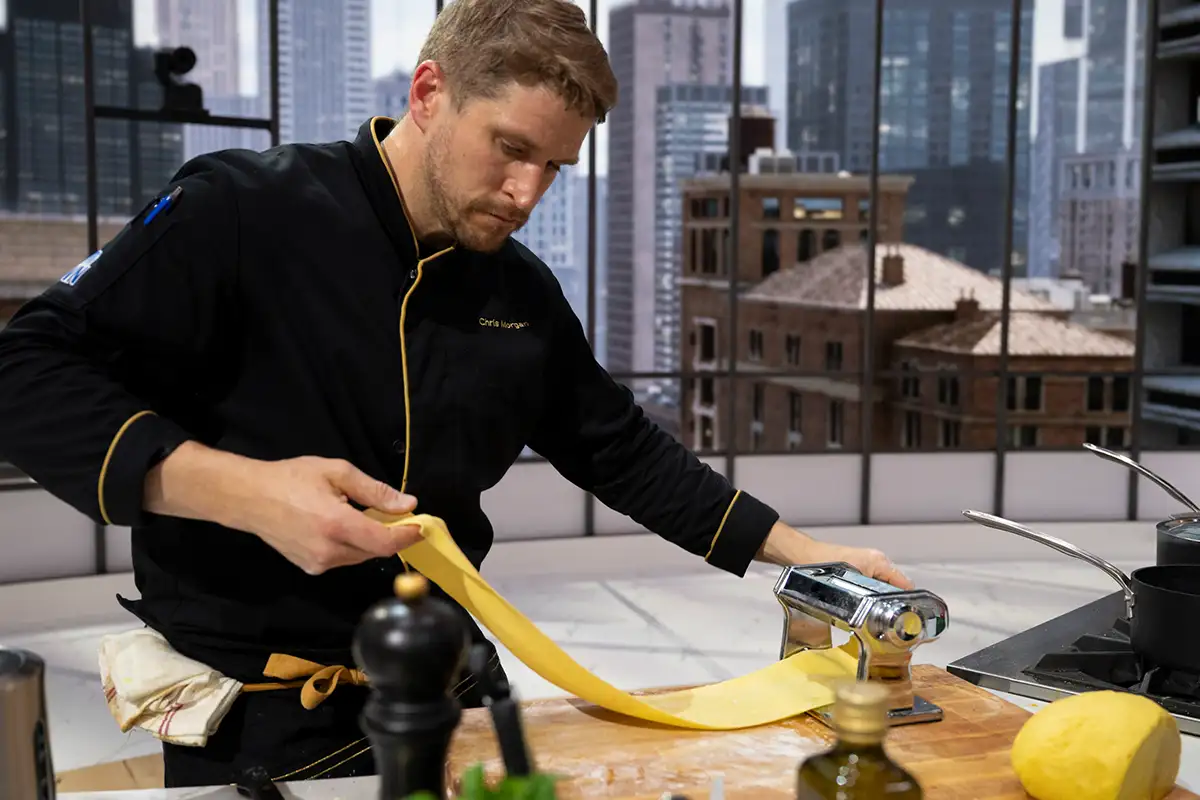
The shock surrounding the results was amplified by Buddha’s reputation entering the episode. Throughout the competition, he had repeatedly been praised as one of the most polished and disciplined chefs in the cast. Many fans believed he represented the highest level of culinary technique among the remaining contestants, making his sudden collapse feel almost surreal.
Some viewers even accused the show of prioritizing dramatic television moments over fairly identifying the best chef. Others argued that a semifinal challenge should never rely so heavily on luck, especially when random assignments can dramatically affect the level of difficulty each contestant faces.
Despite the criticism, the judges acknowledged Buddha’s creativity and ambition during the challenge. However, ambition alone was not enough to overcome the brutal demands of balancing bitterness at such a high level.
In the end, the semifinal episode completely shattered expectations for the season’s finale. Instead of cruising comfortably into the final round as many predicted, Buddha Lo suddenly found himself fighting for survival after one disastrous challenge changed the trajectory of the entire competition.
And for many fans watching at home, it didn’t feel like the season’s strongest chef simply lost.
It felt like the format finally caught up to him.


