
One of the most unexpected consequences of Rhoda Magbitang’s Top Chef Season 23 victory is that fans are suddenly revisiting one of the season’s most controversial moments: the infamous Station Swap Quickfire from Episode 11.
What initially seemed like a short-lived debate has exploded back into the spotlight following the finale, with viewers once again arguing over whether that challenge may have altered the course of the entire season.
The controversy stems from a Quickfire challenge in which contestants were unexpectedly required to swap stations during the competition, forcing them to adapt to circumstances outside their control. The twist immediately divided viewers when it first aired, but the debate has intensified now that Rhoda has been crowned champion.
At the center of the discussion is the outcome of that challenge.
Rhoda ultimately won the Quickfire, while fellow finalist Sherry Cardoso narrowly missed out on the victory and the accompanying $10,000 prize.
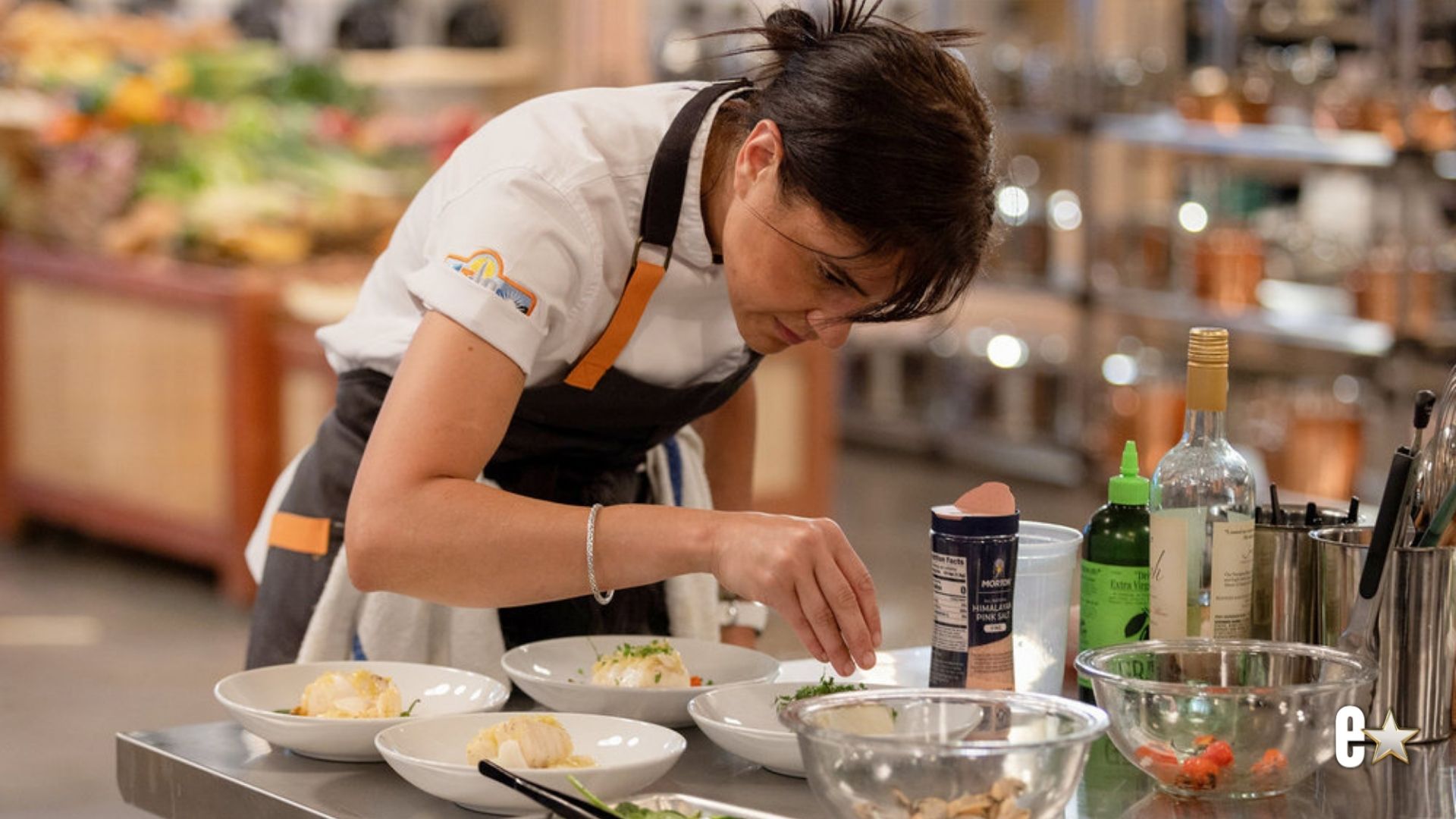
At the time, many fans viewed the result as controversial because of how heavily the station swap twist influenced the challenge. Some believed the format created advantages and disadvantages that had little to do with the chefs’ actual cooking abilities.
Now that the season is over, those arguments have resurfaced with renewed intensity.
Across social media and fan forums, some viewers have jokingly labeled the Episode 11 Quickfire as the “butterfly effect” moment that changed the entire trajectory of the season.
According to this theory, seemingly small differences in momentum can have major consequences later in a competition. Supporters of this view argue that winning the Quickfire gave Rhoda additional confidence, positive attention from the judges, and valuable momentum heading into the final stretch of the season.
:max_bytes(150000):strip_icc()/Top-Chef-Winner-FT-DGTL0626-03-c4b650fd9d2a42e7892bb1340b57b2f7.jpg)
Others point to the financial aspect of the challenge.
Had Sherry won instead of Rhoda, she would have taken home the $10,000 prize and perhaps entered subsequent challenges with a different mindset. While no one can know whether that would have changed the outcome of the season, some fans enjoy speculating about how differently events might have unfolded.
Memes and humorous posts have flourished as a result.
Many viewers have jokingly referred to the Station Swap Quickfire as “the most expensive station change in Top Chef history,” while others have sarcastically suggested that historians of the franchise should begin their analysis of Season 23 with that single challenge.
However, not everyone is buying into the narrative.
A large group of fans has pushed back strongly against attempts to connect Rhoda’s championship directly to one controversial Quickfire.
Their argument is straightforward: even if the Episode 11 result was debatable, Rhoda still had to survive multiple elimination challenges and outperform elite competitors over the remainder of the season.

Supporters note that Rhoda did not simply win one challenge and coast to the title. After returning from Last Chance Kitchen, she continued to perform at a high level throughout the competition, earning praise from judges in several key challenges leading up to the finale.
For that reason, many viewers believe it is unfair to reduce her championship to a single moment.
As one common sentiment among fans suggests, a contestant cannot accidentally win an entire season of Top Chef. Regardless of twists, luck, or controversial judging decisions, the winner still has to deliver exceptional food repeatedly under intense pressure.
That perspective has become one of the primary counterarguments to the butterfly-effect theory.
Still, the renewed debate highlights just how closely contested Season 23 was.
When fans begin re-examining a Quickfire challenge from months earlier, it usually means the final result remains emotionally charged. The fact that viewers are still dissecting individual decisions, twists, and judging outcomes demonstrates how invested they became in the journeys of Rhoda, Sherry, and fellow finalist Laurence Louie.

Whether the Station Swap Quickfire ultimately mattered or not is impossible to prove.
What is certain is that Rhoda’s victory has reopened nearly every major debate from the season. And as fans continue searching for the moment that defined Season 23, Episode 11’s controversial Quickfire has become one of the most frequently cited candidates.
For now, the argument continues: was it merely an interesting twist in the middle of the season, or the first domino in a chain of events that ultimately led to one of the most debated championships in recent Top Chef history?


